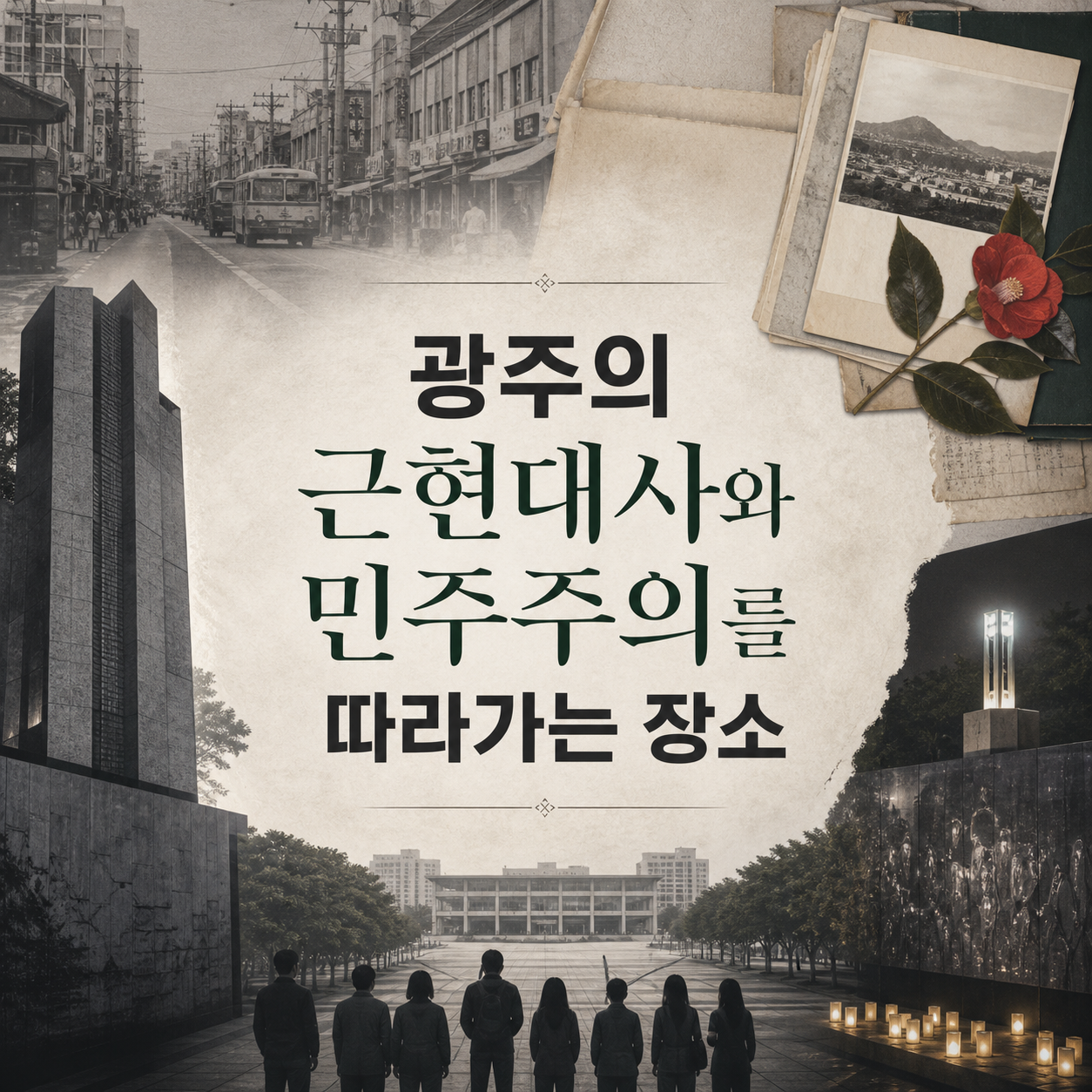
From the Student Independence Movement Memorial to the National May 18th Cemetery, reading the record first and walking the ground after is what makes the history connect.
Gwangju's modern history doesn't come through clearly from textbook dates alone. Learning the background at the Student Independence Movement Memorial Hall and the May 18 Democratic Uprising Archives, then walking the actual ground at Geumnam-ro and the old Jeonnam Provincial Office, and finally paying respects at the national cemetery and the original burial ground — following that order is what ties citizens' choices, state violence, and solidarity into one connected story. This list gathers the real places to walk it in that sequence.
Remember first that these aren't scenic backdrops for photos — they're spaces that hold the memory of victims, survivors, and citizens. Keep your voice down and skip staged photos at the burial grounds, and know that some exhibits contain disturbing material, so if you're bringing children or teenagers, explain the purpose of the visit beforehand. Rather than rushing through, reading each site's full account before moving to the next helps the sequence of events actually connect.